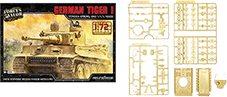
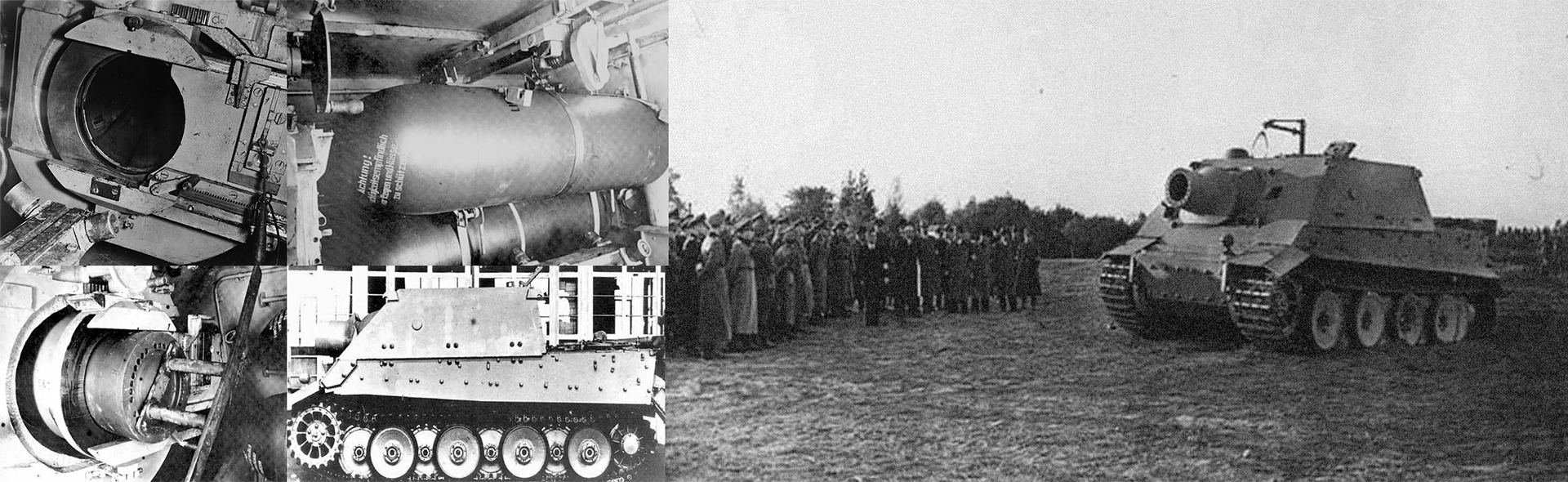
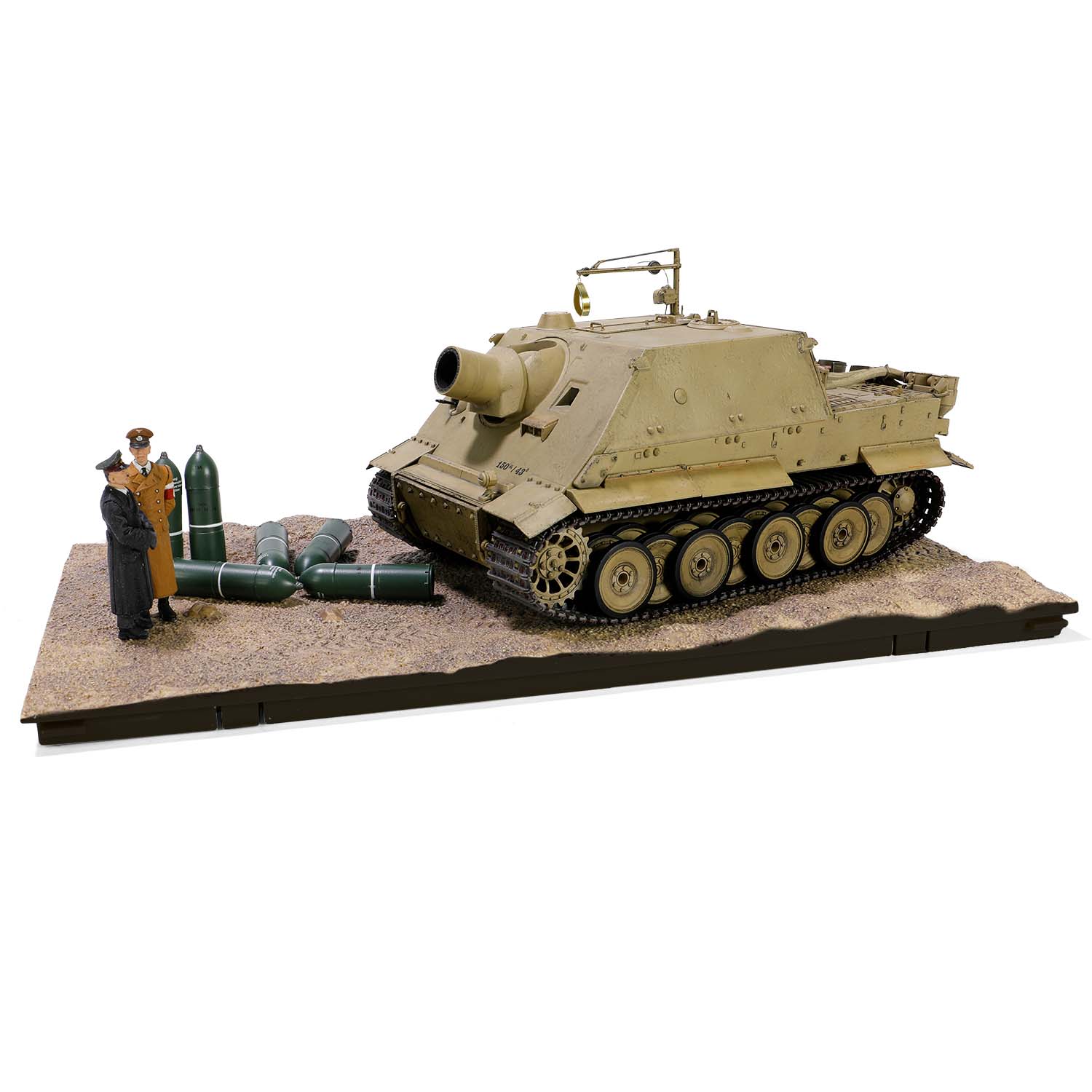
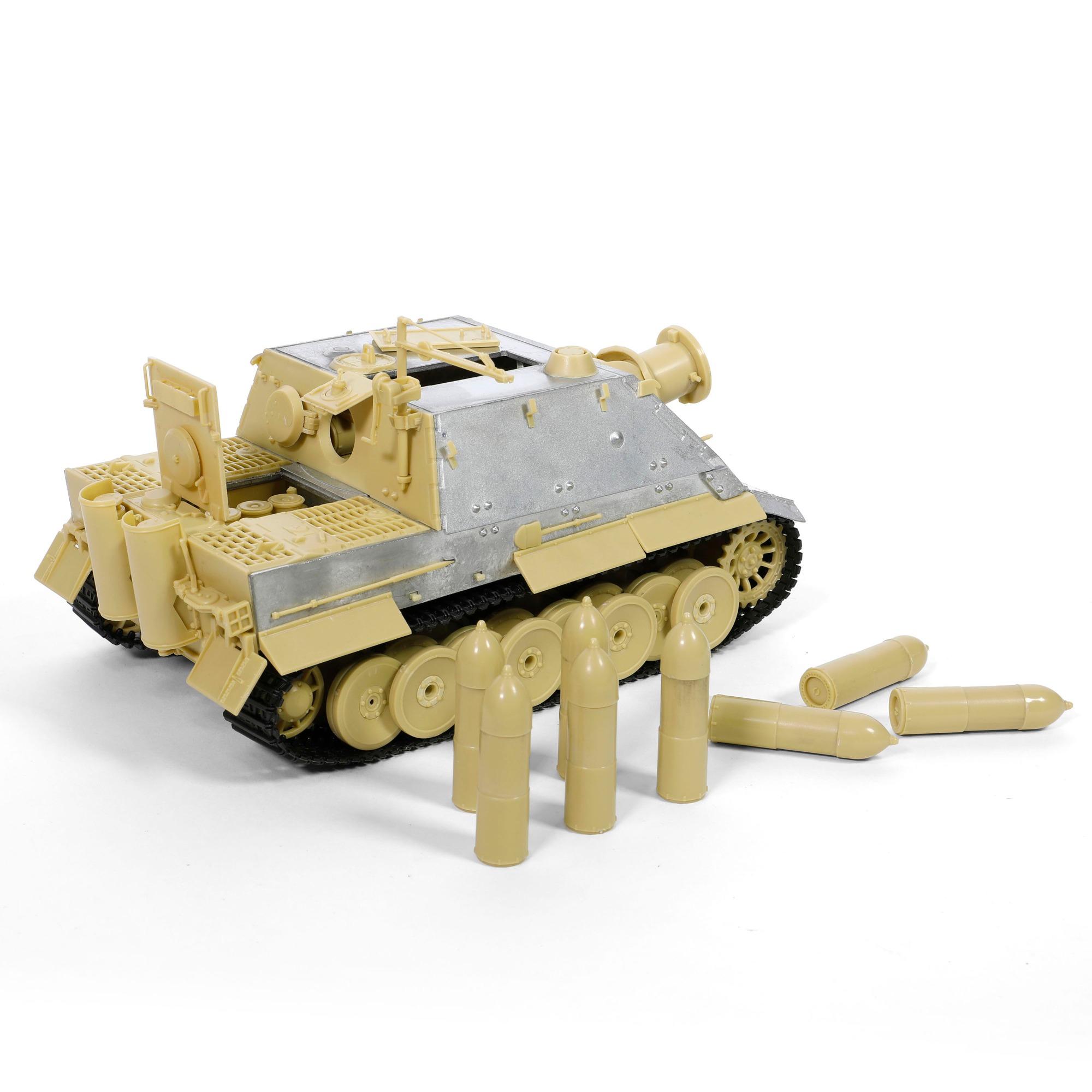
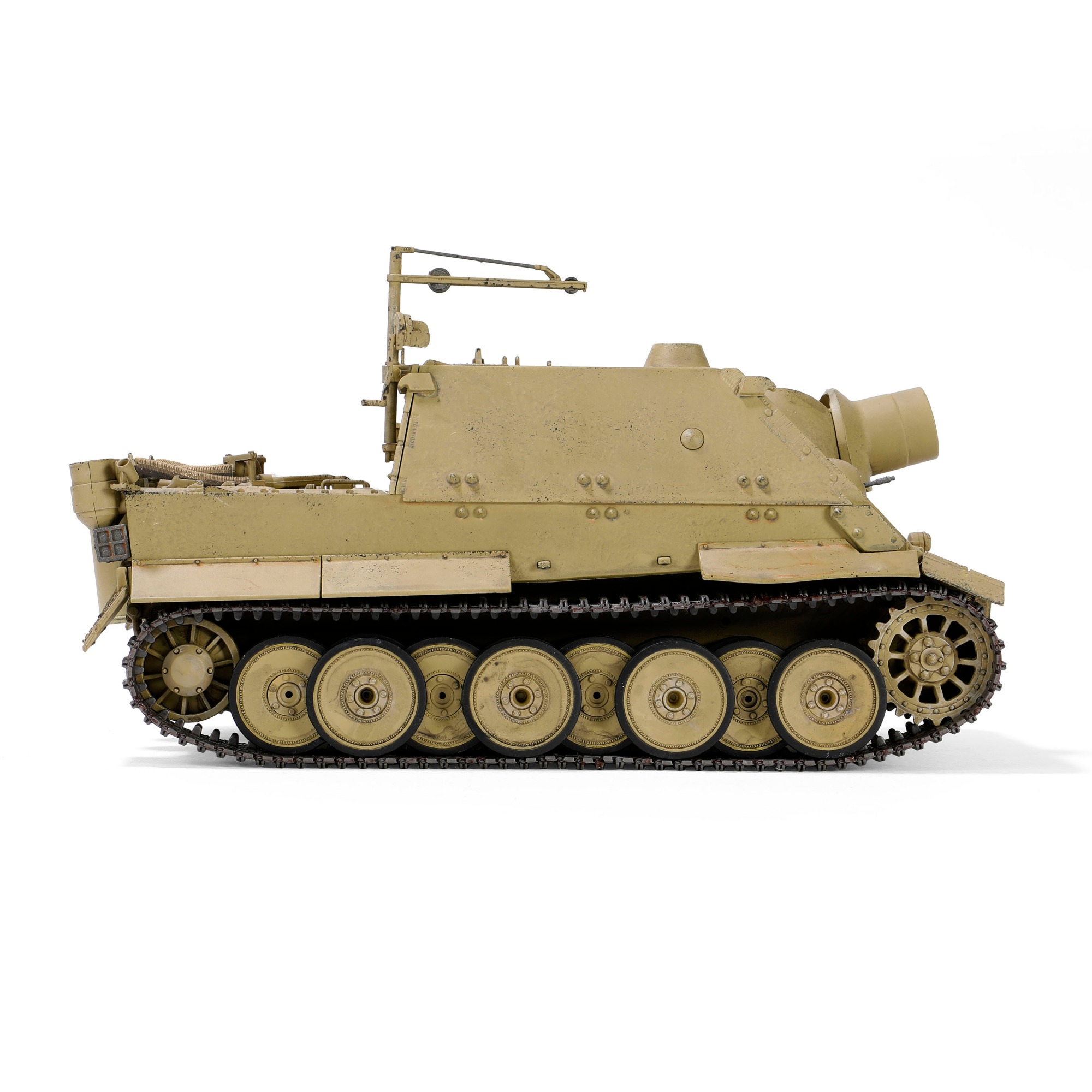
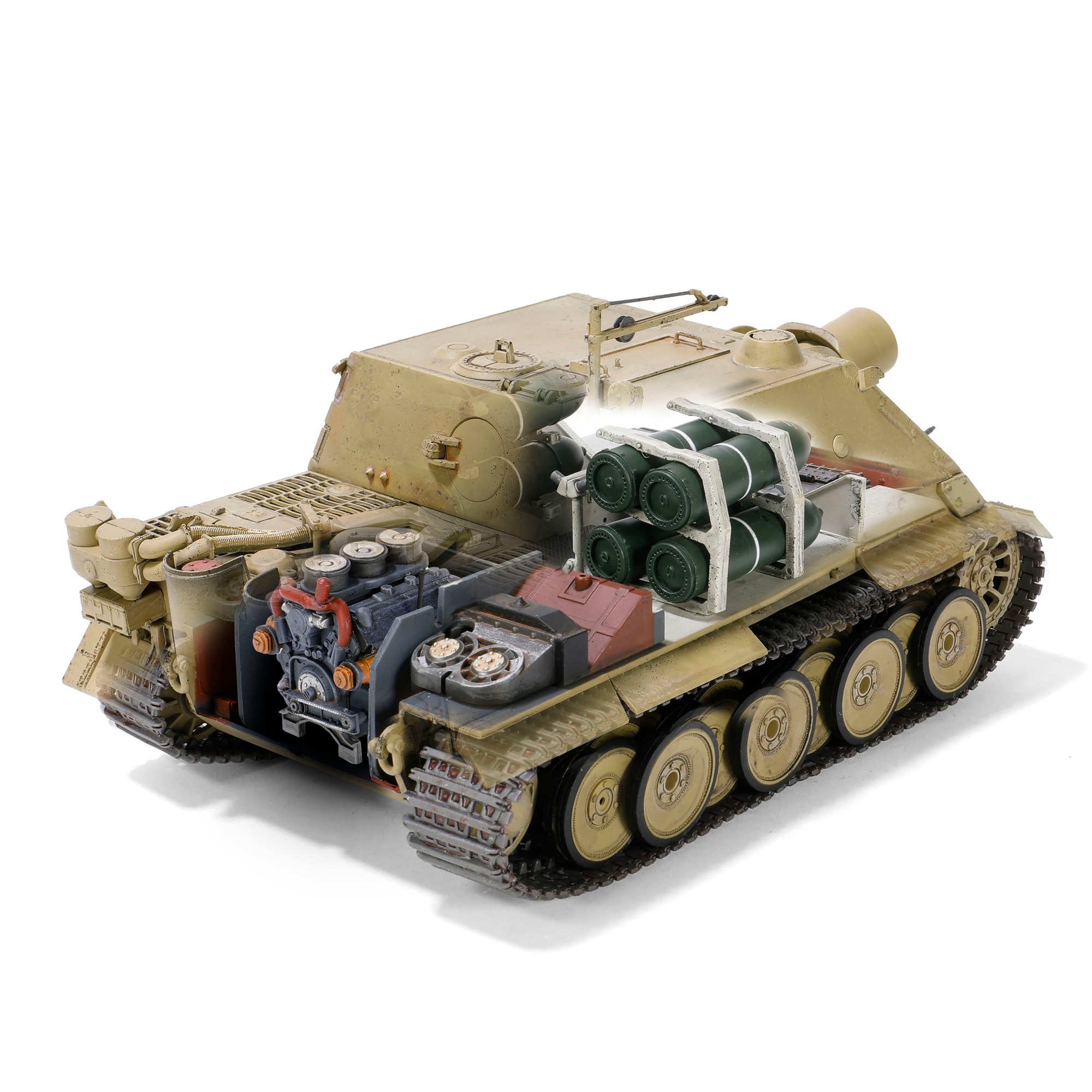
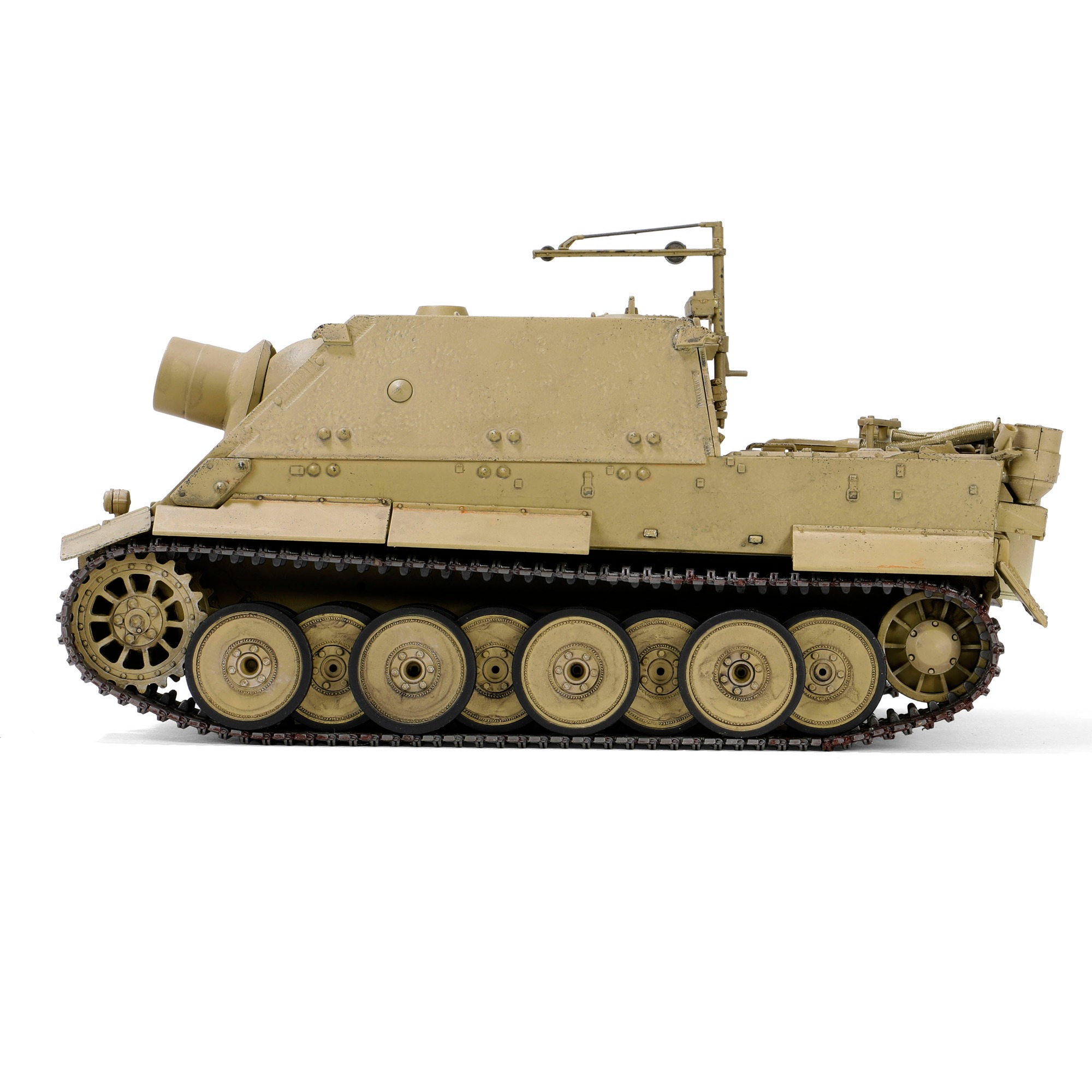
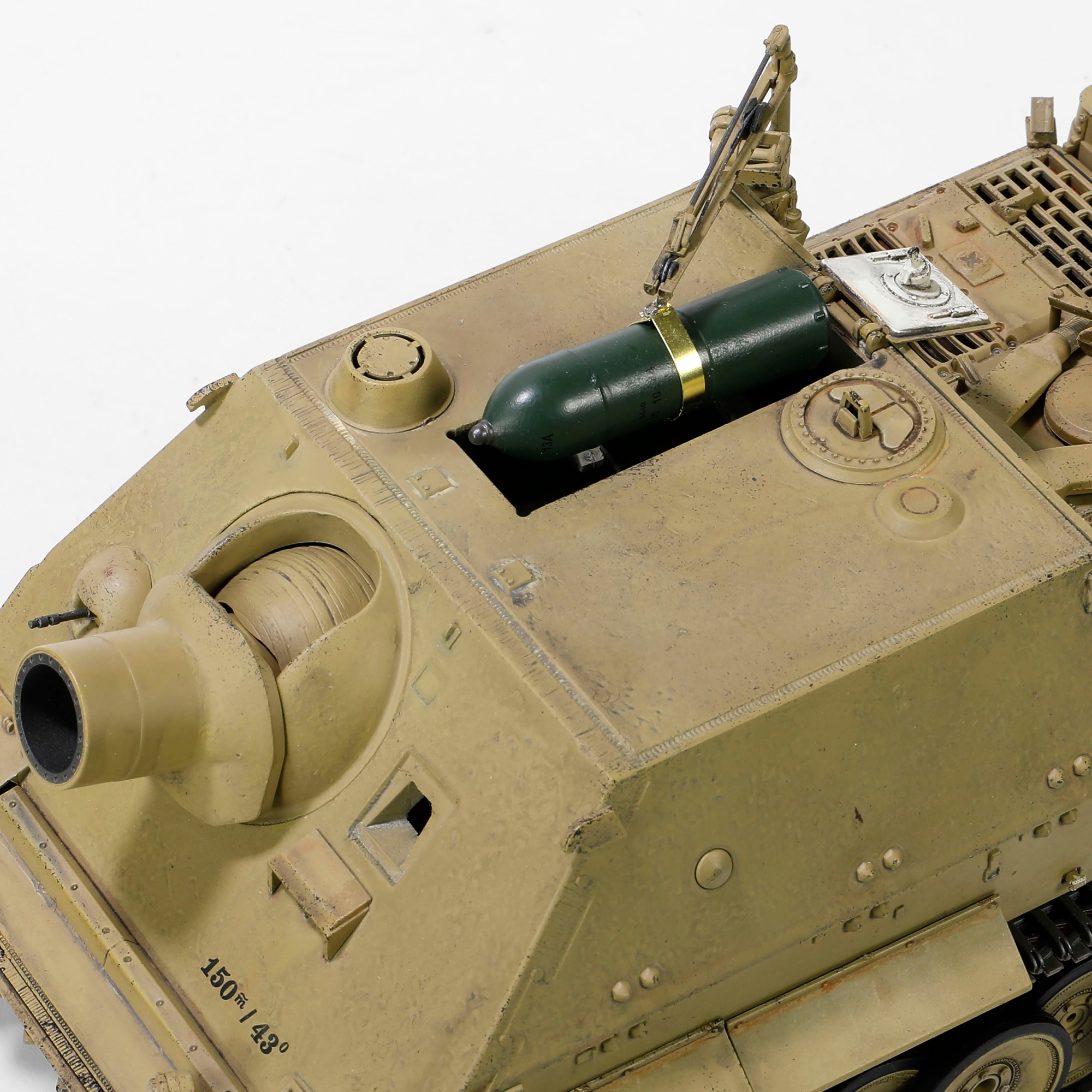
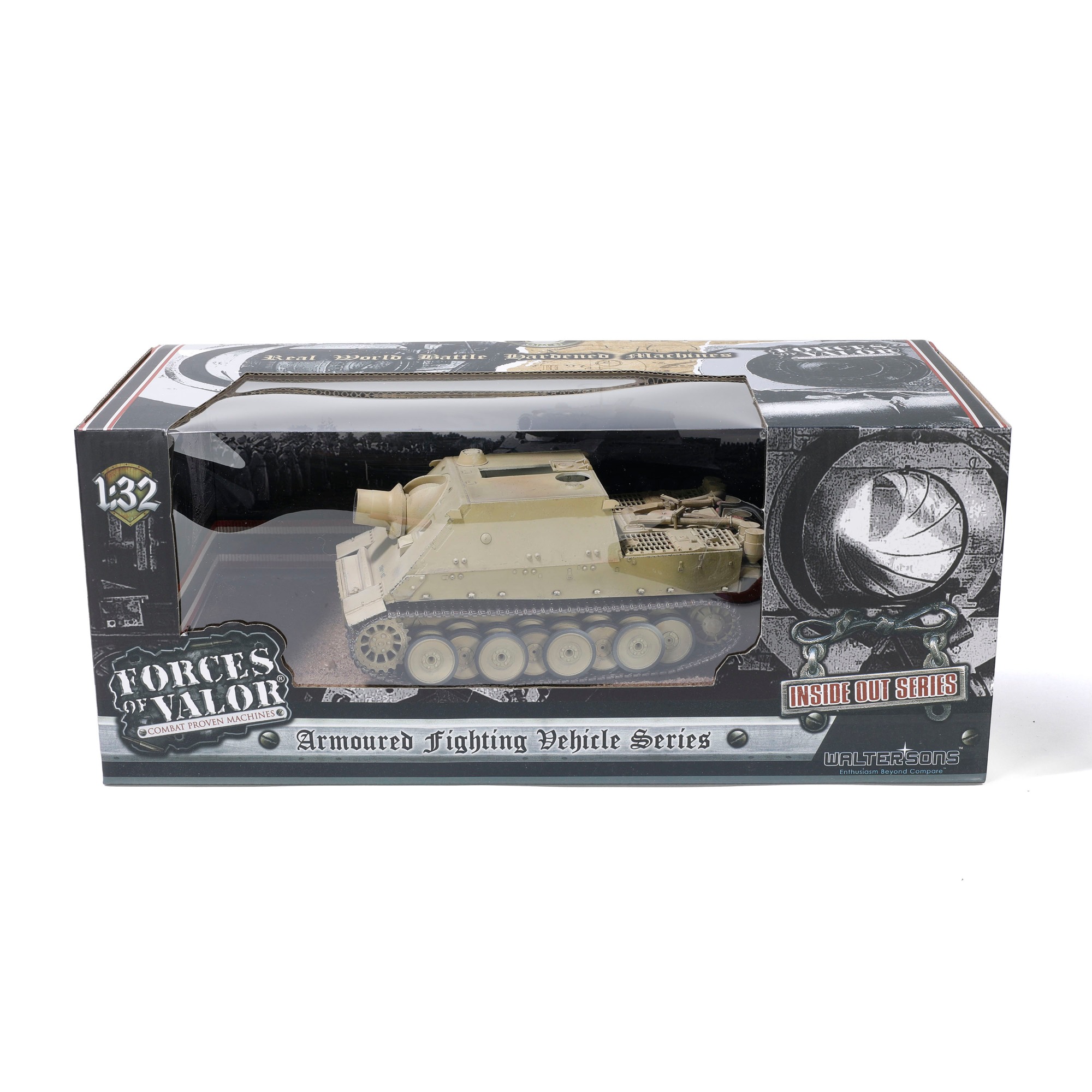
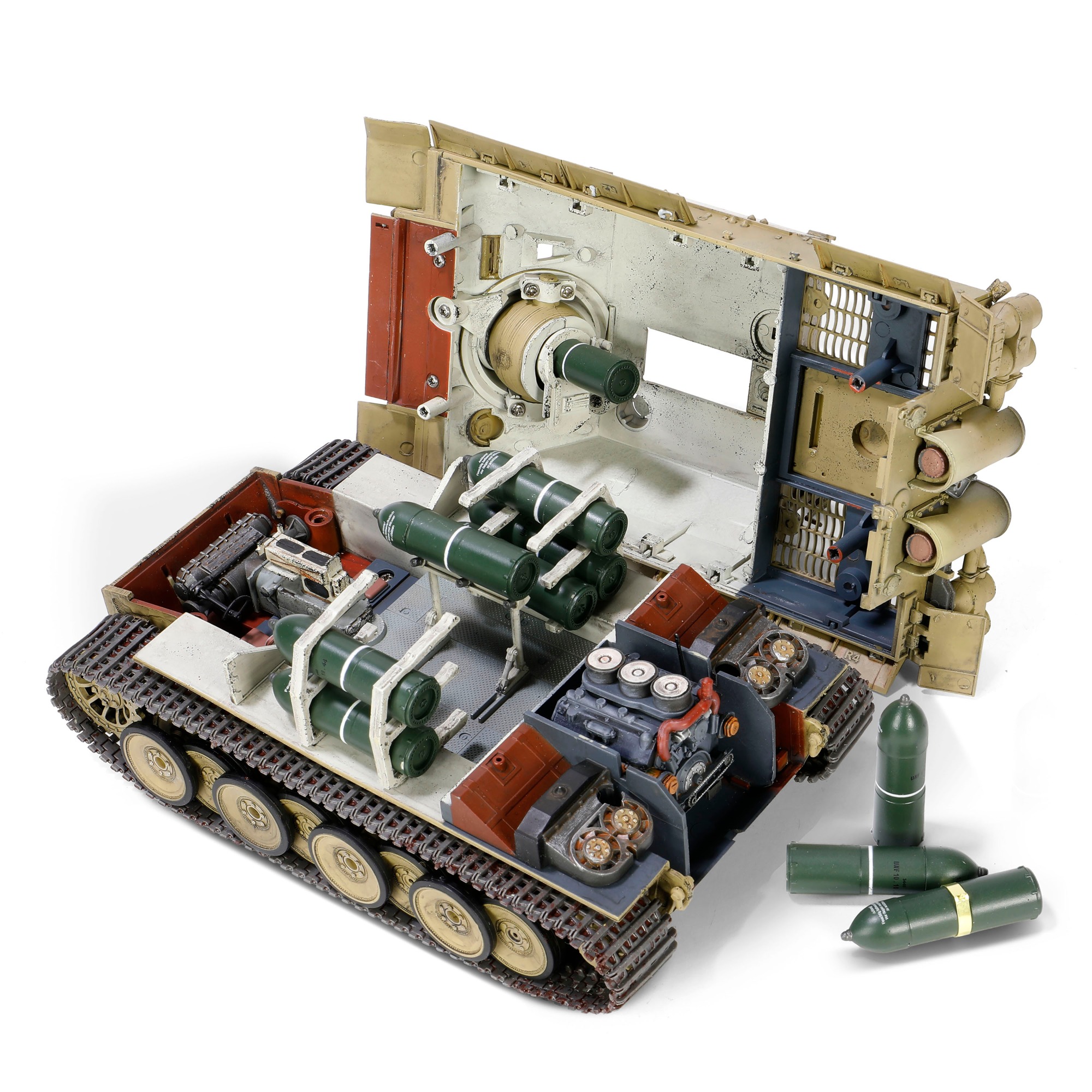
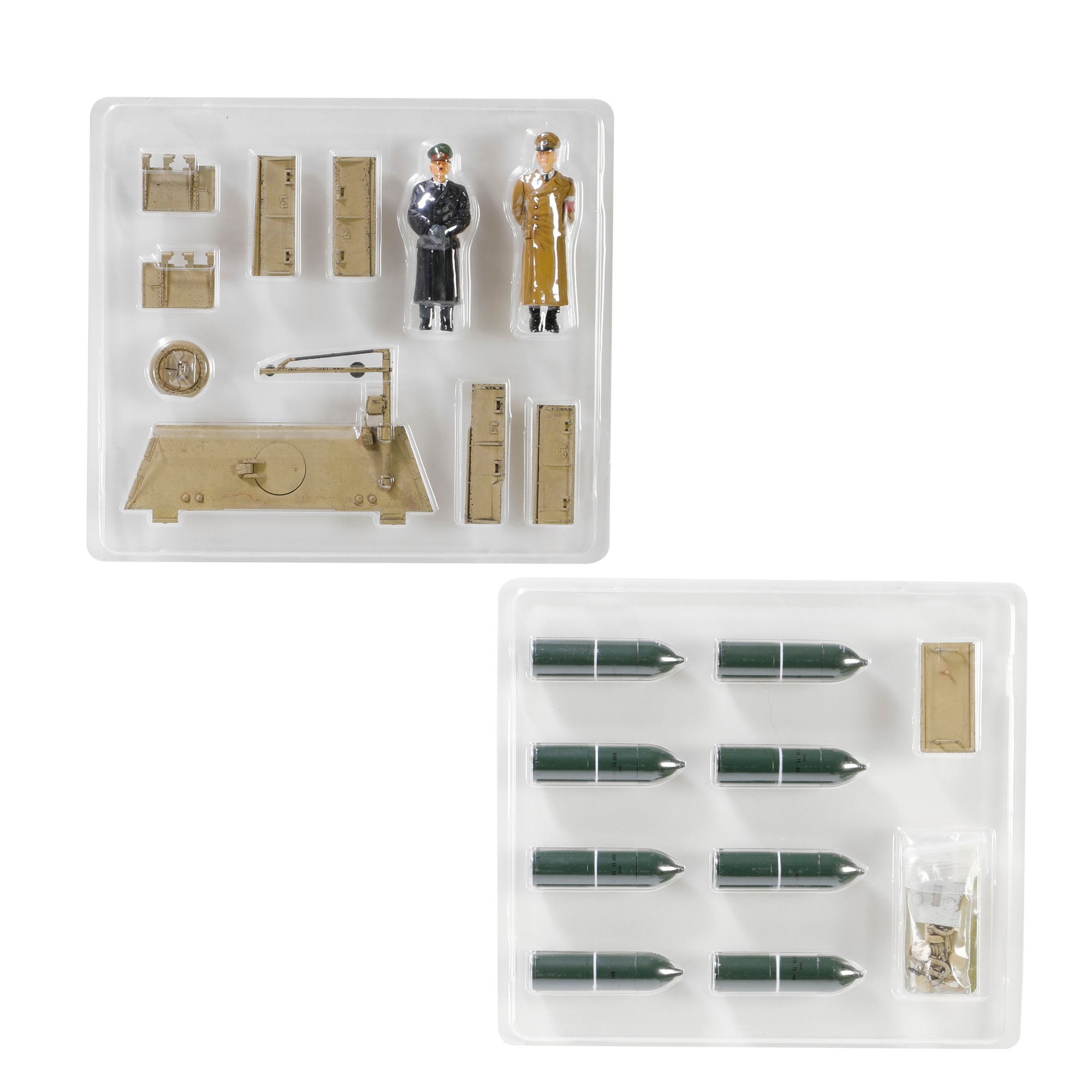
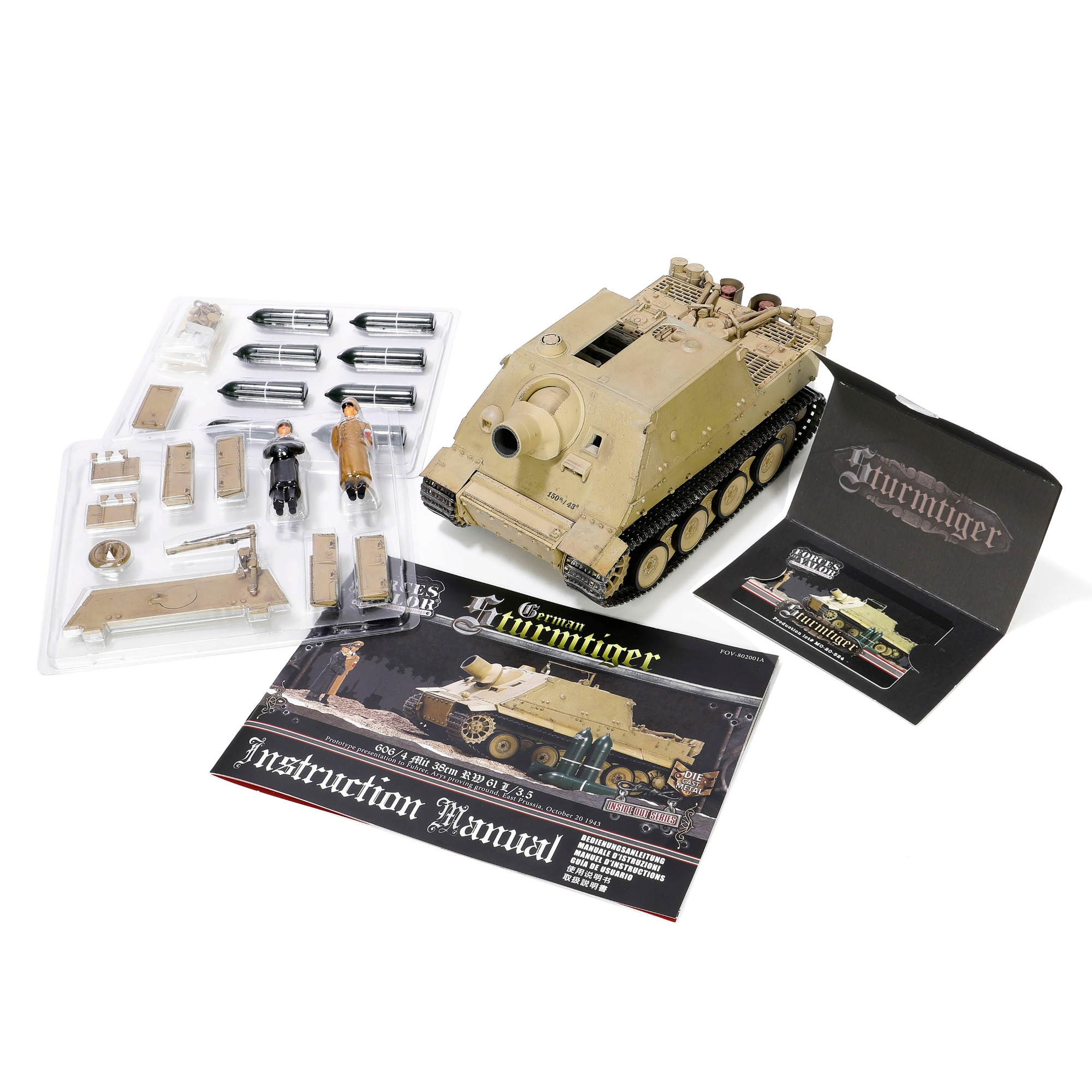
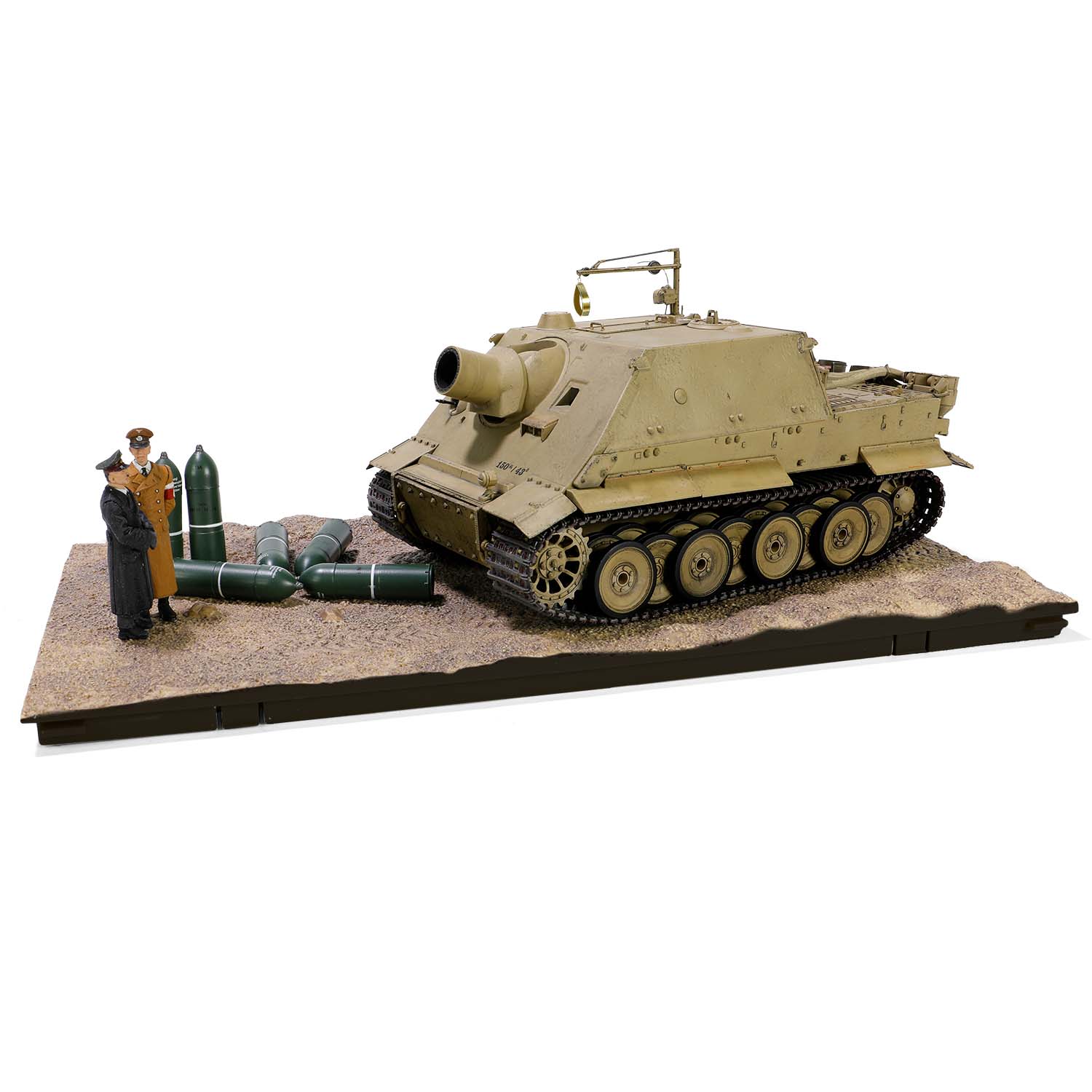
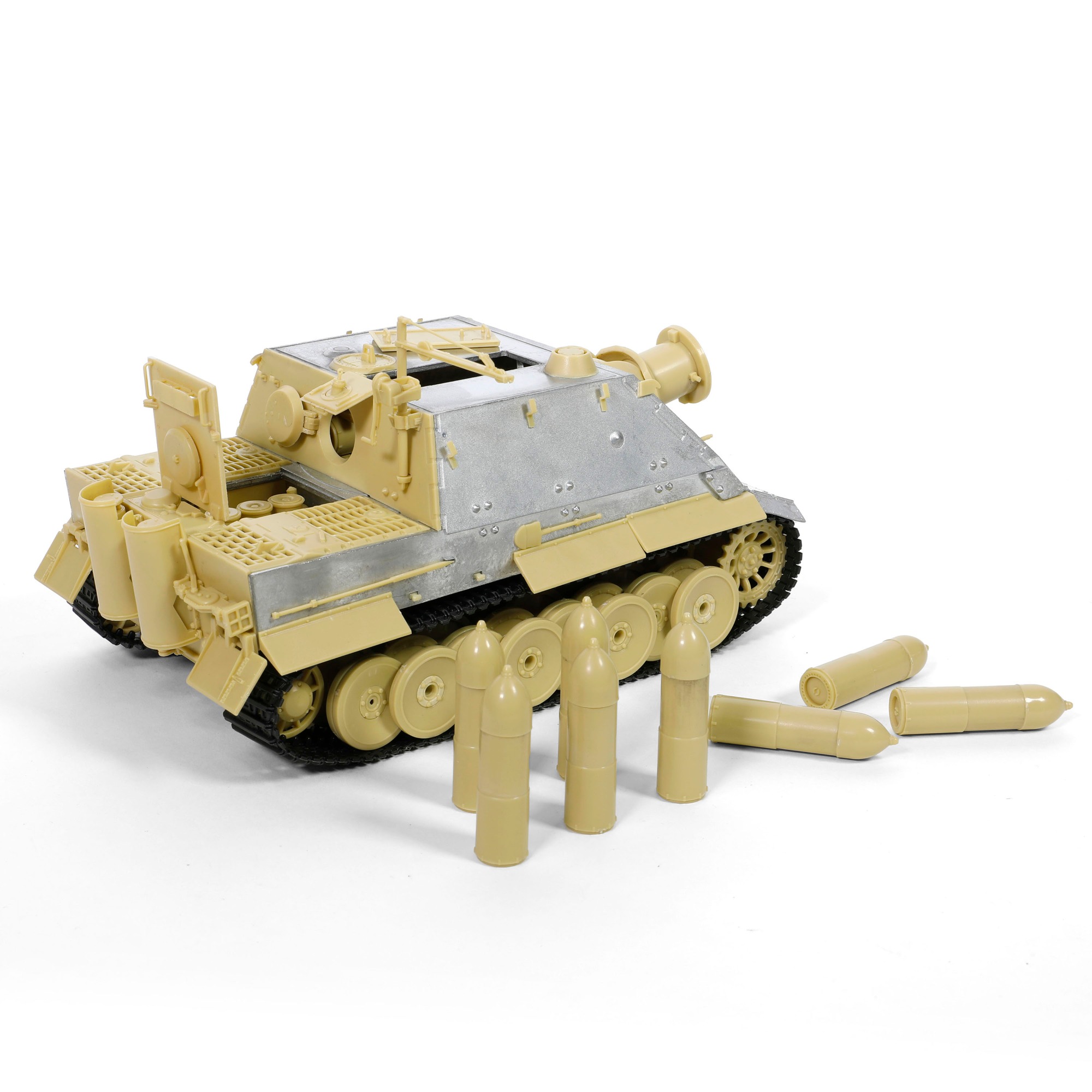
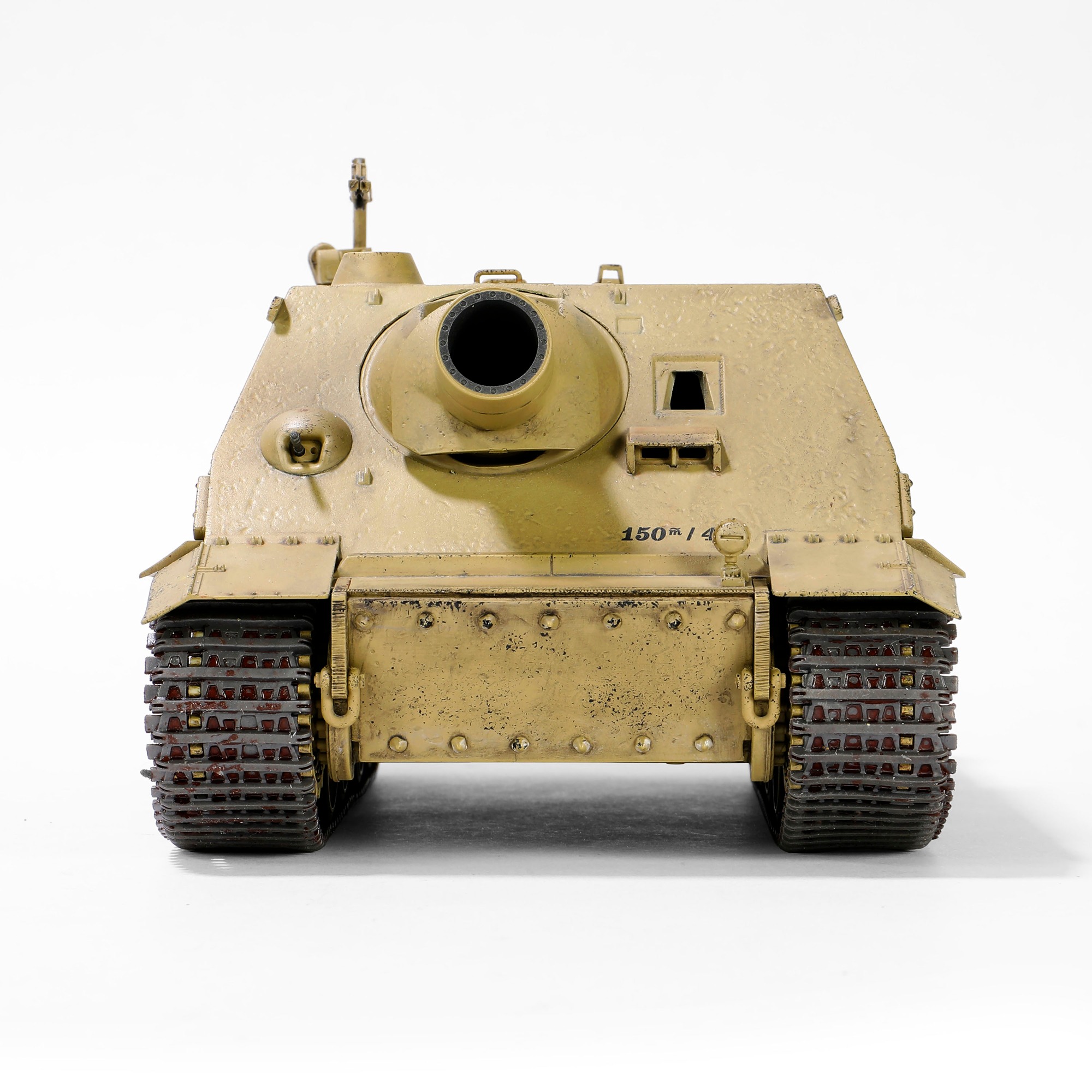
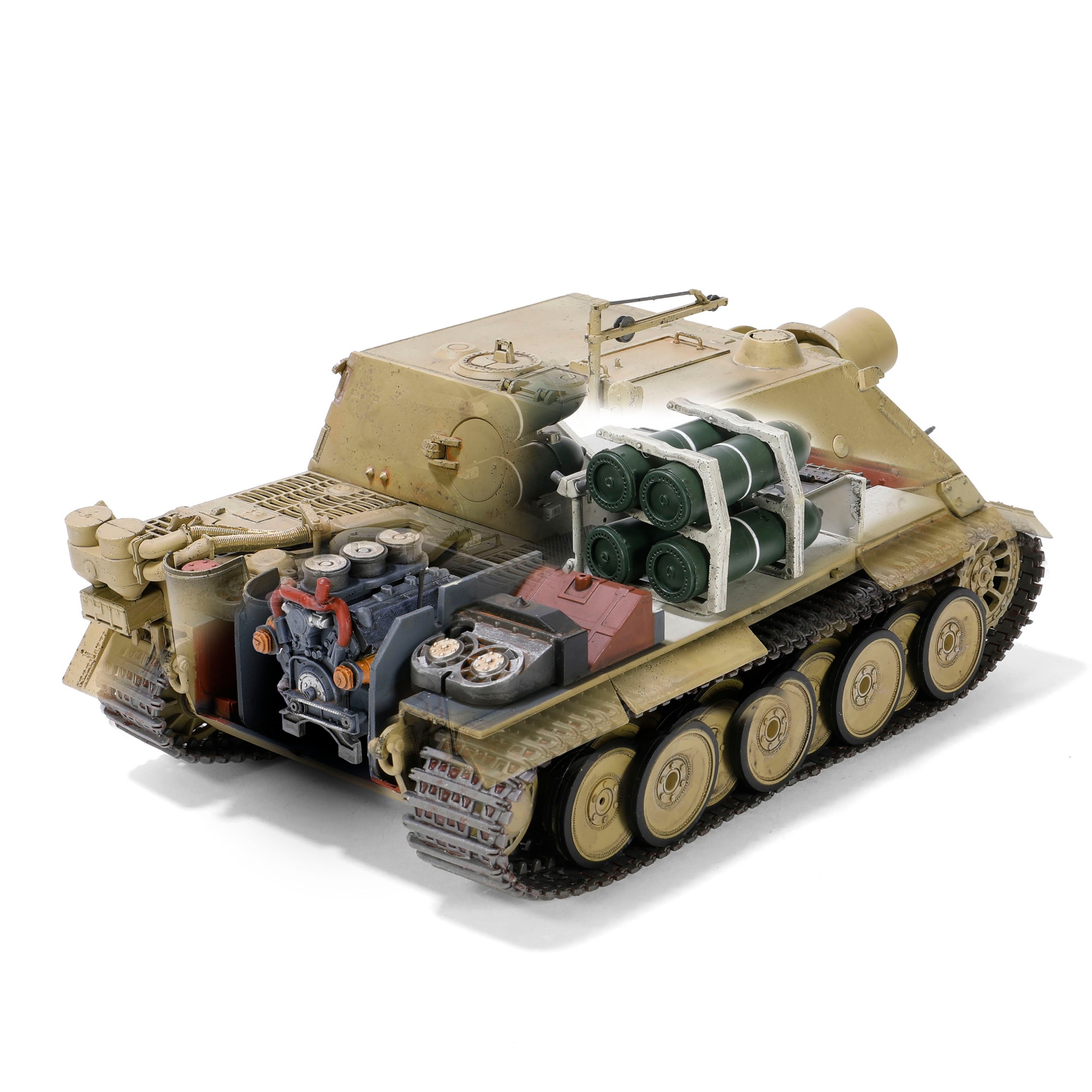
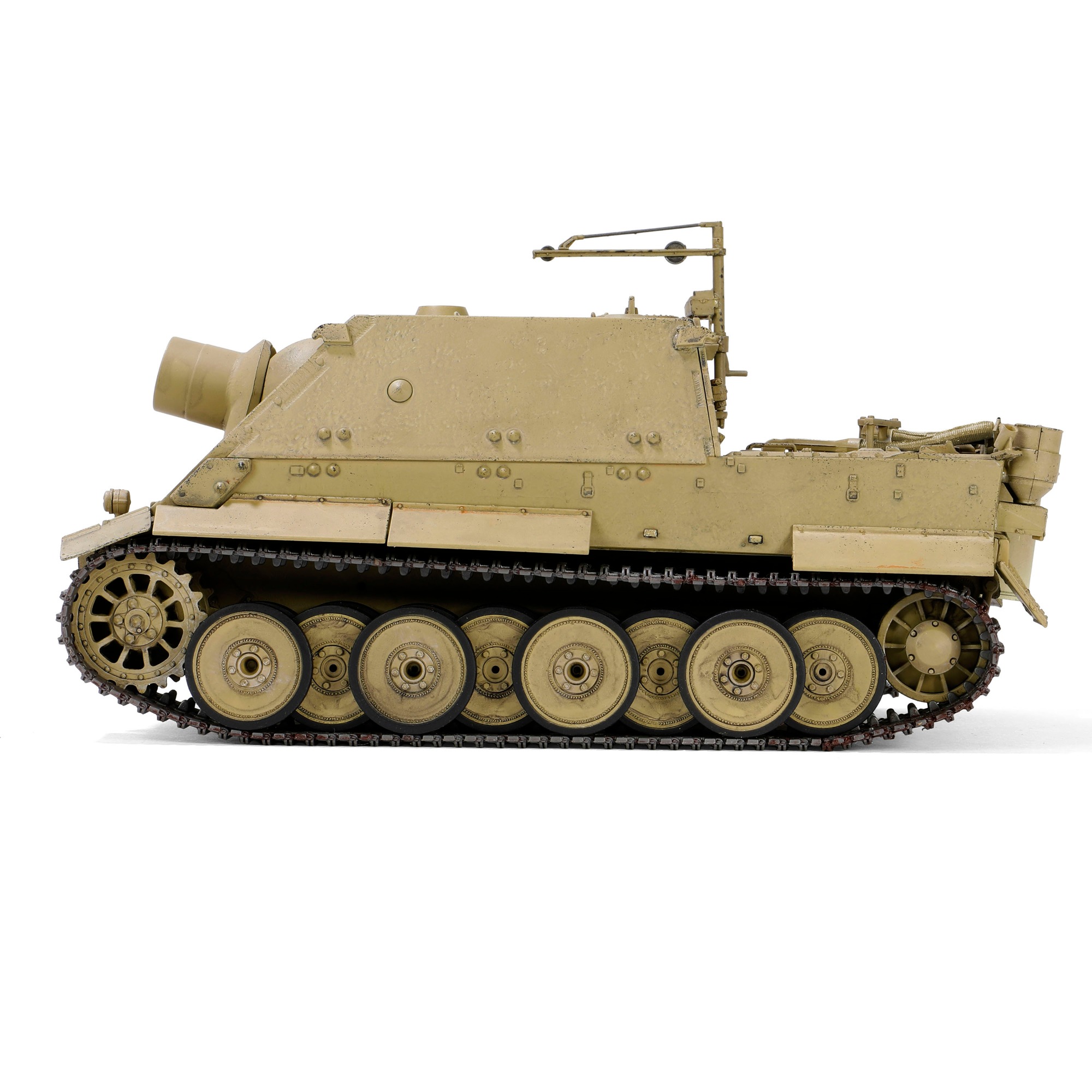
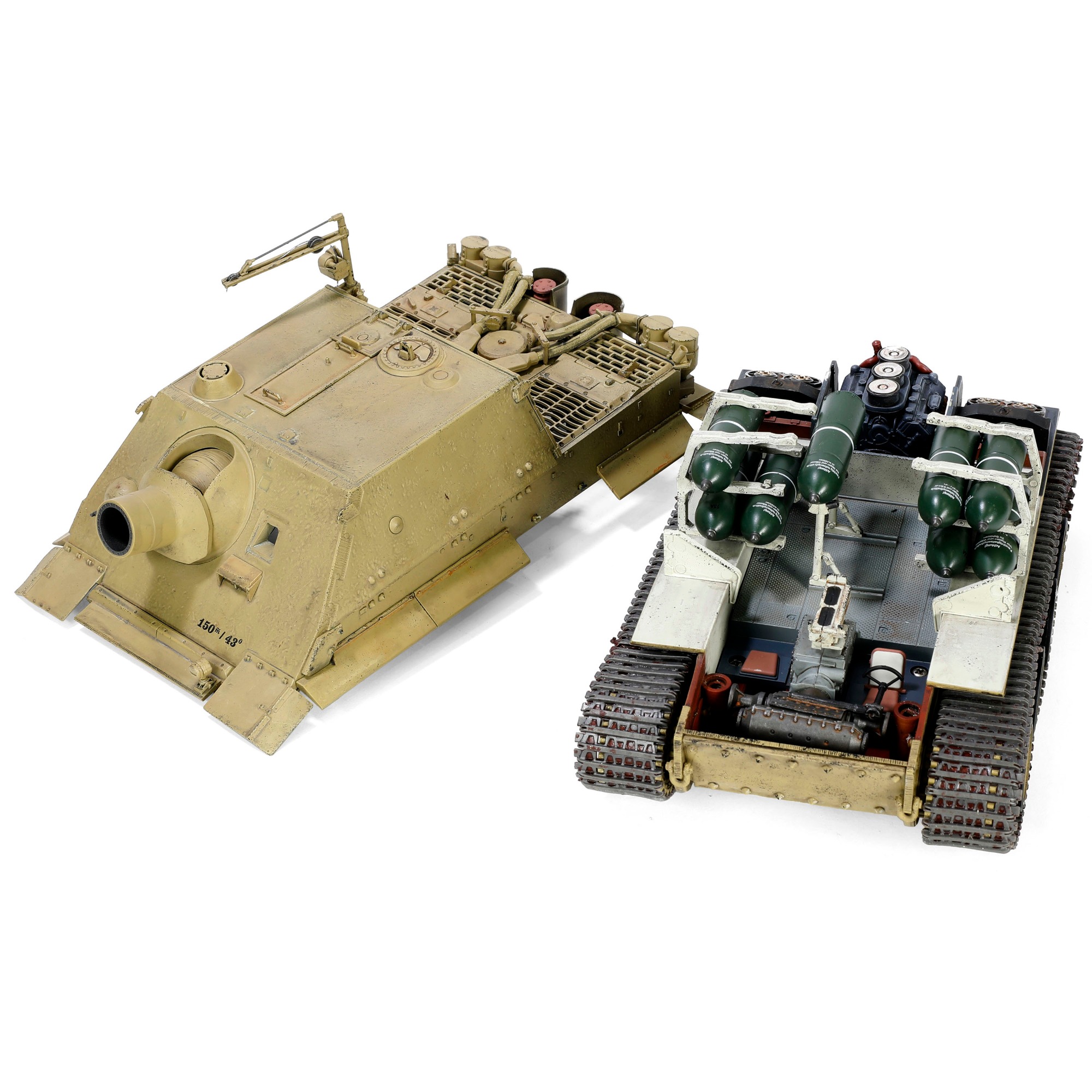
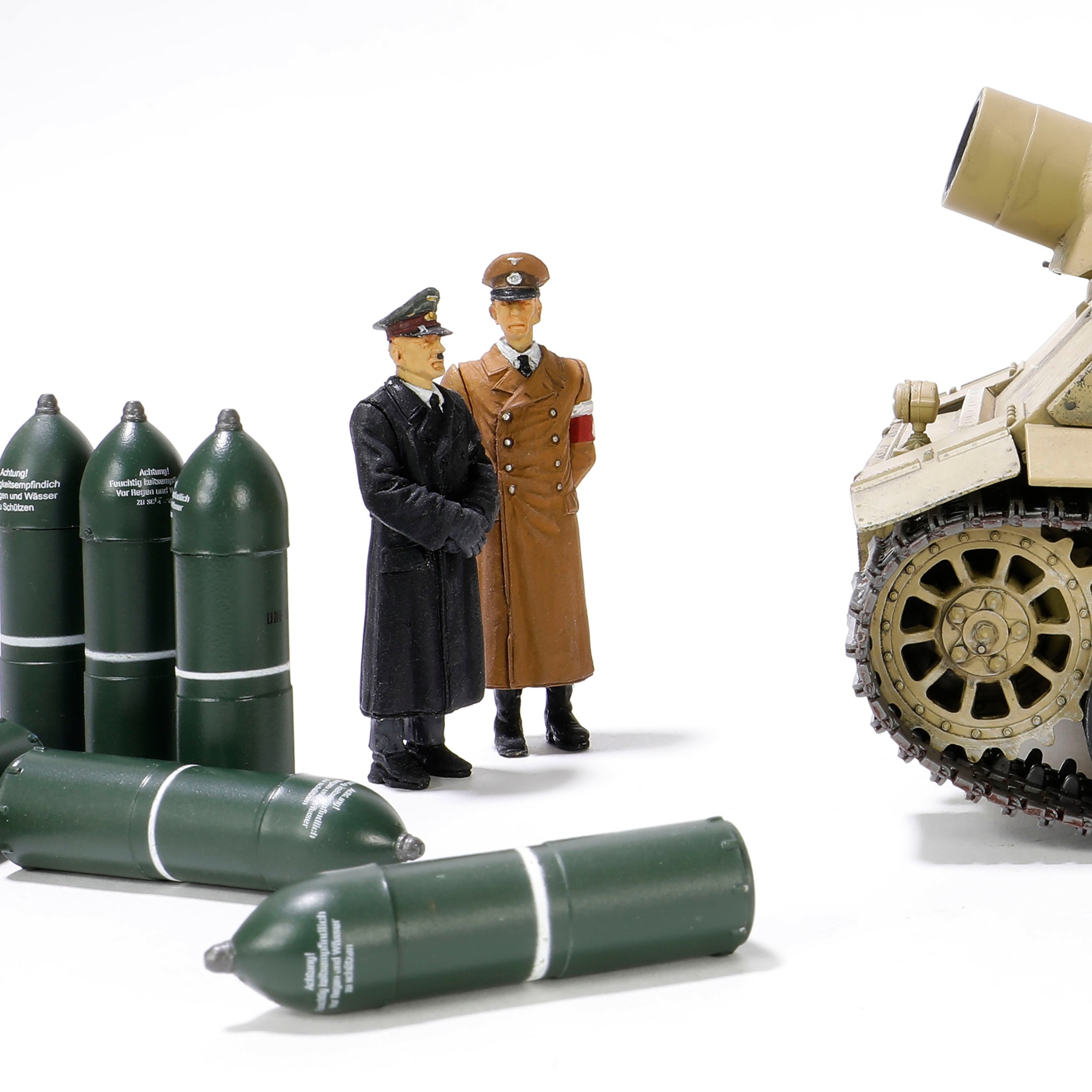
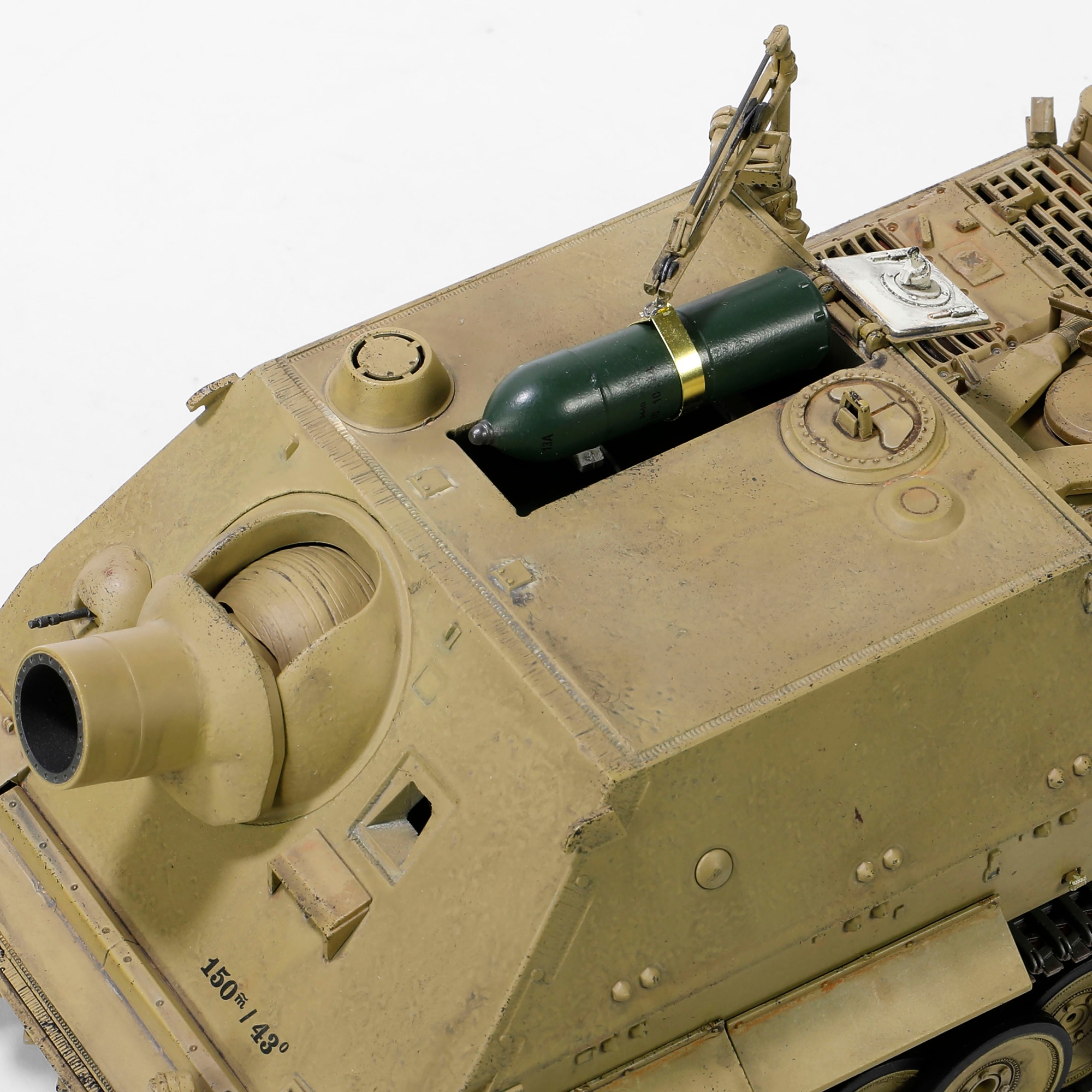
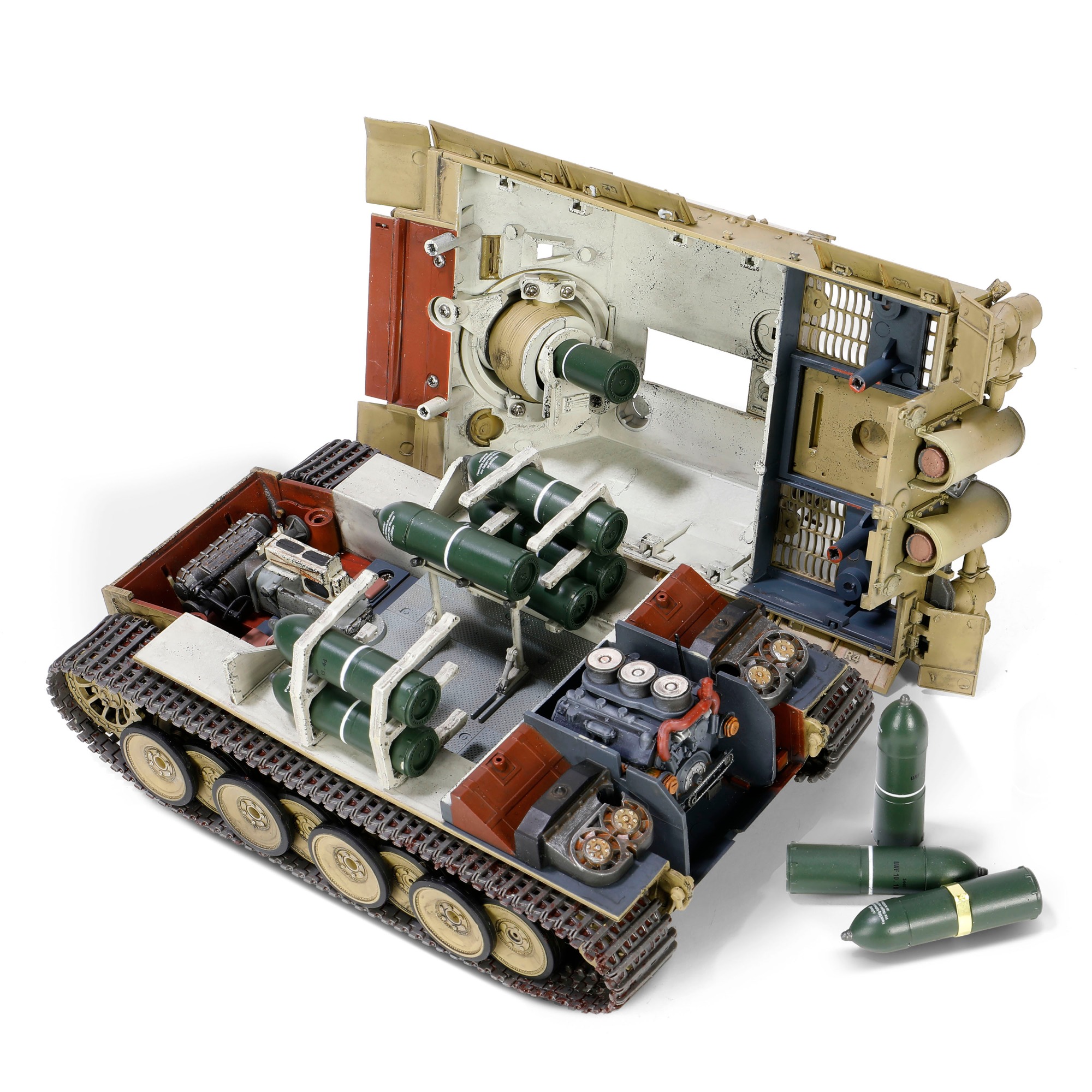
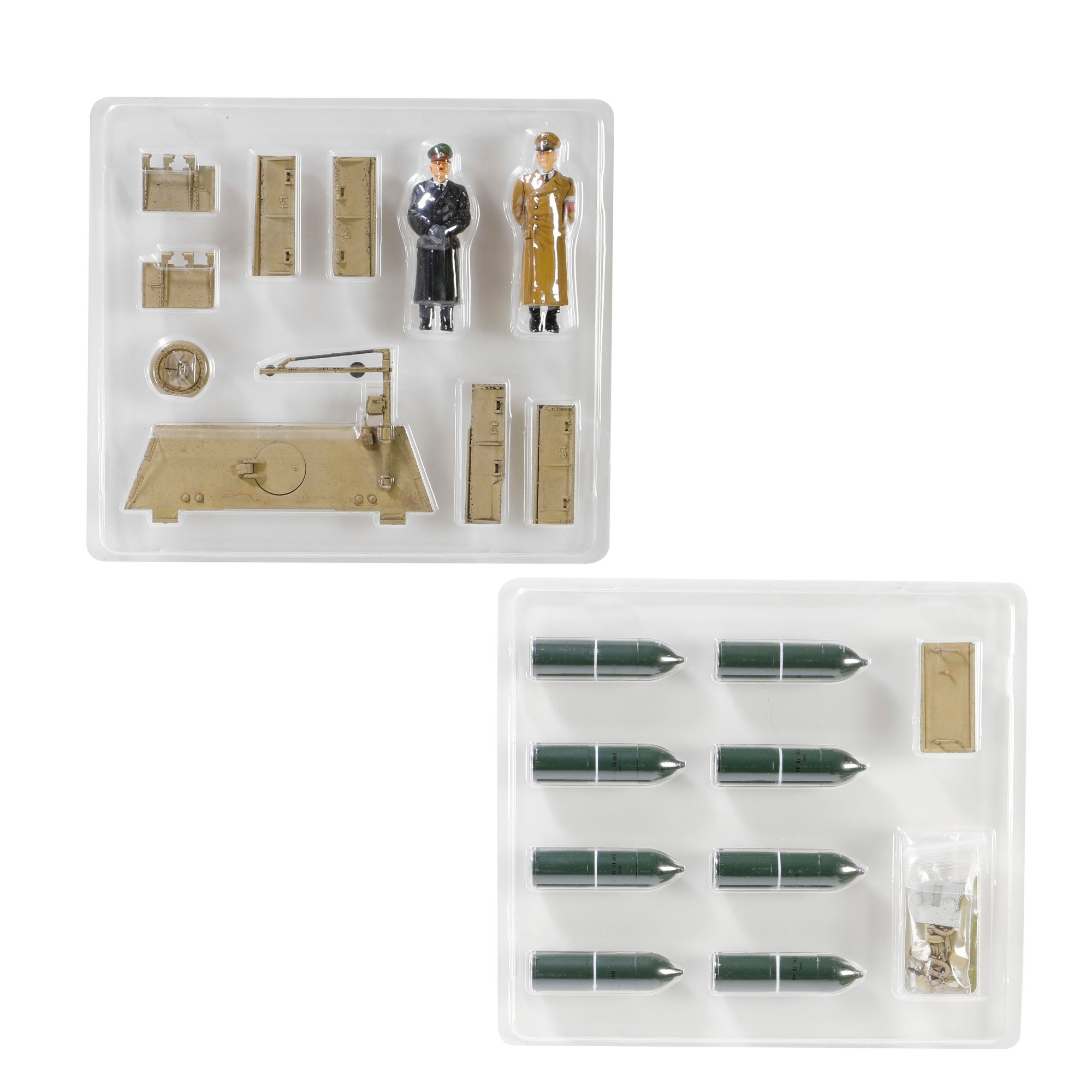
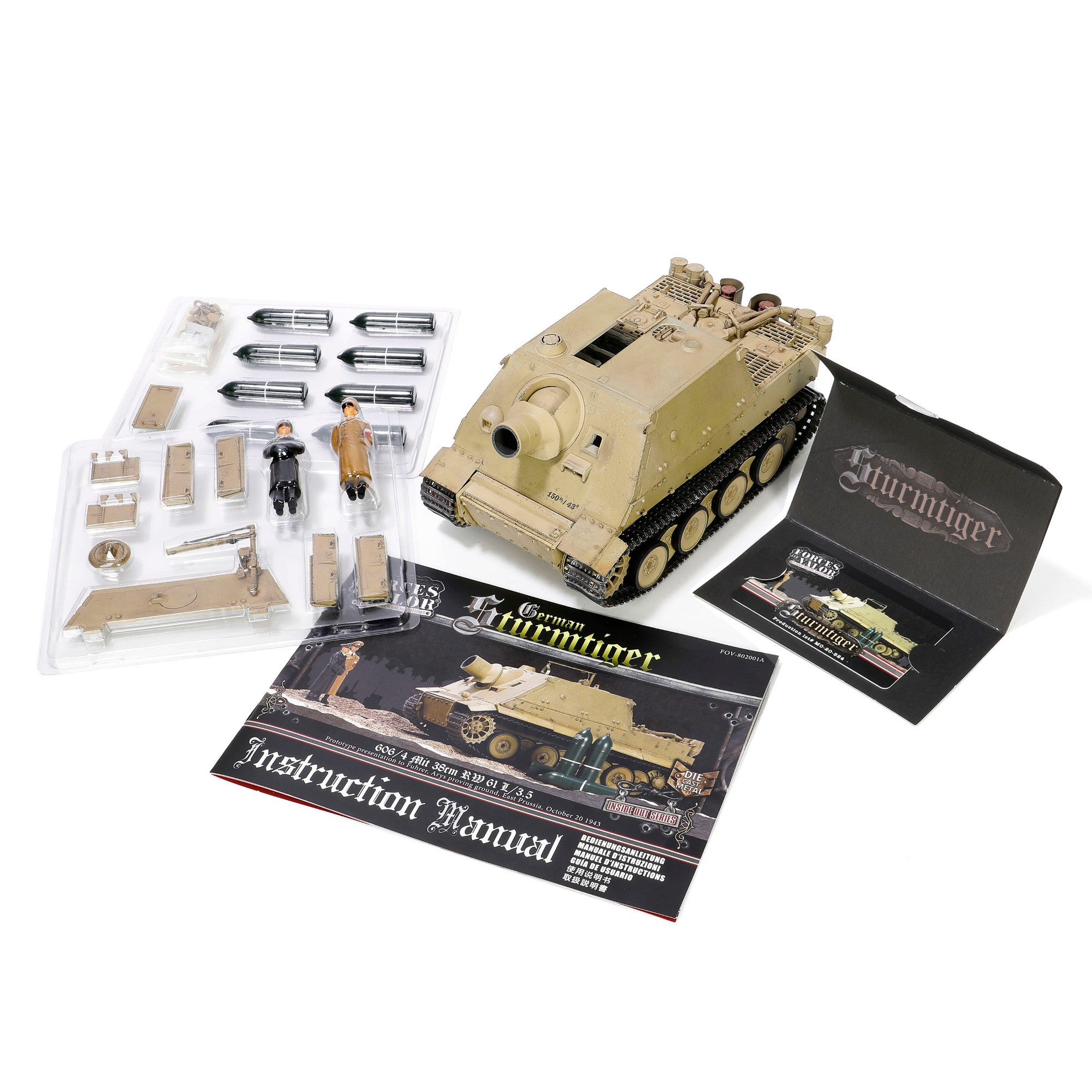
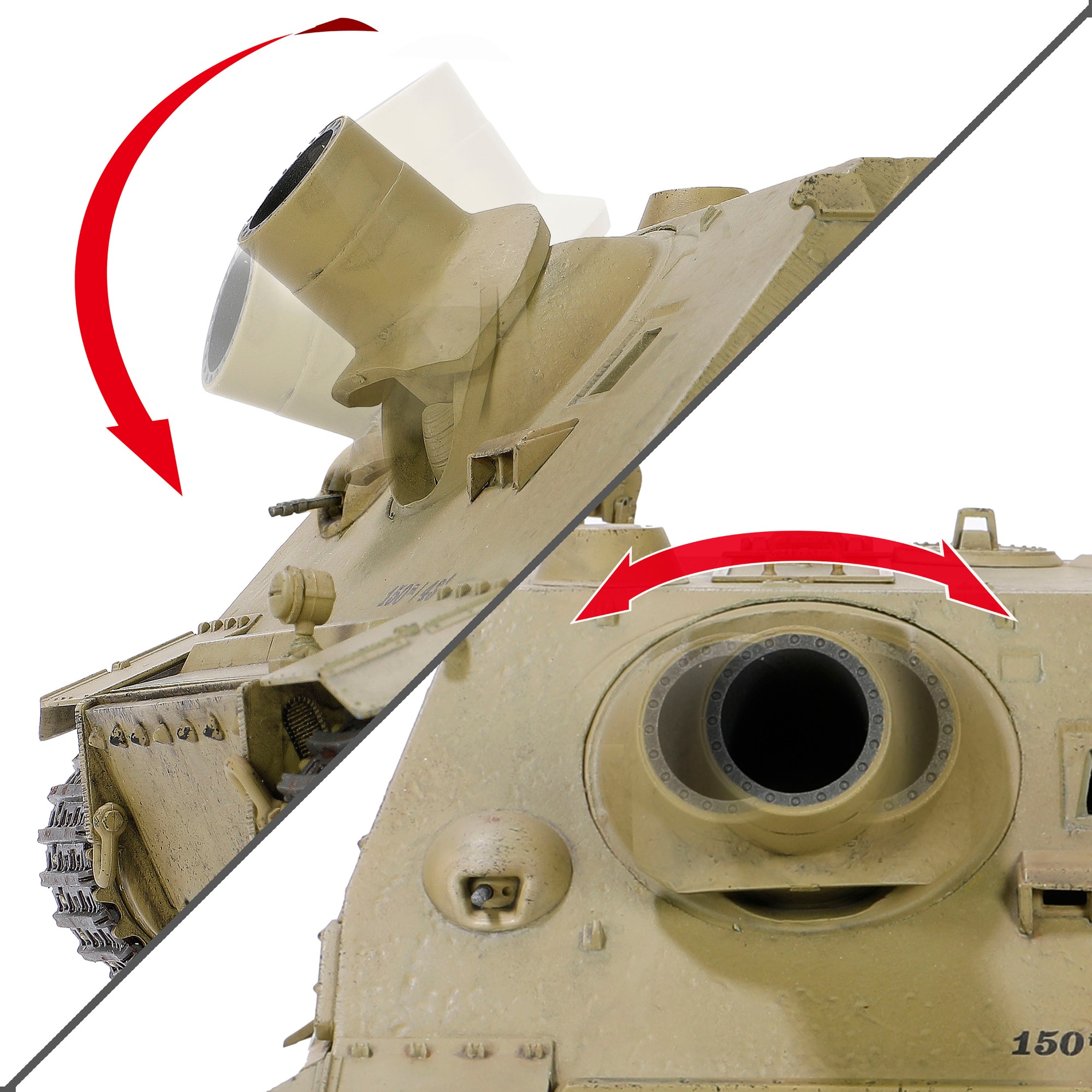
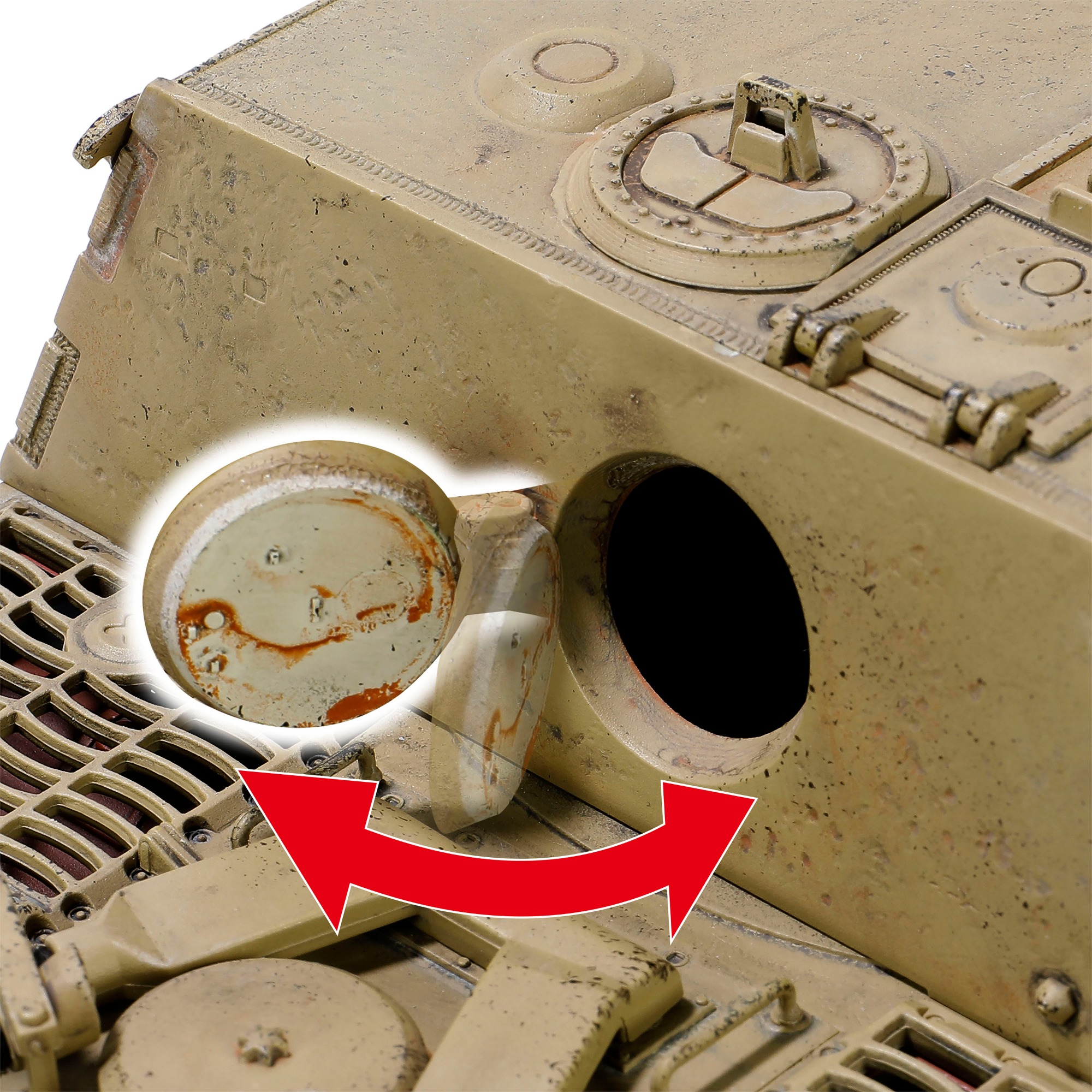
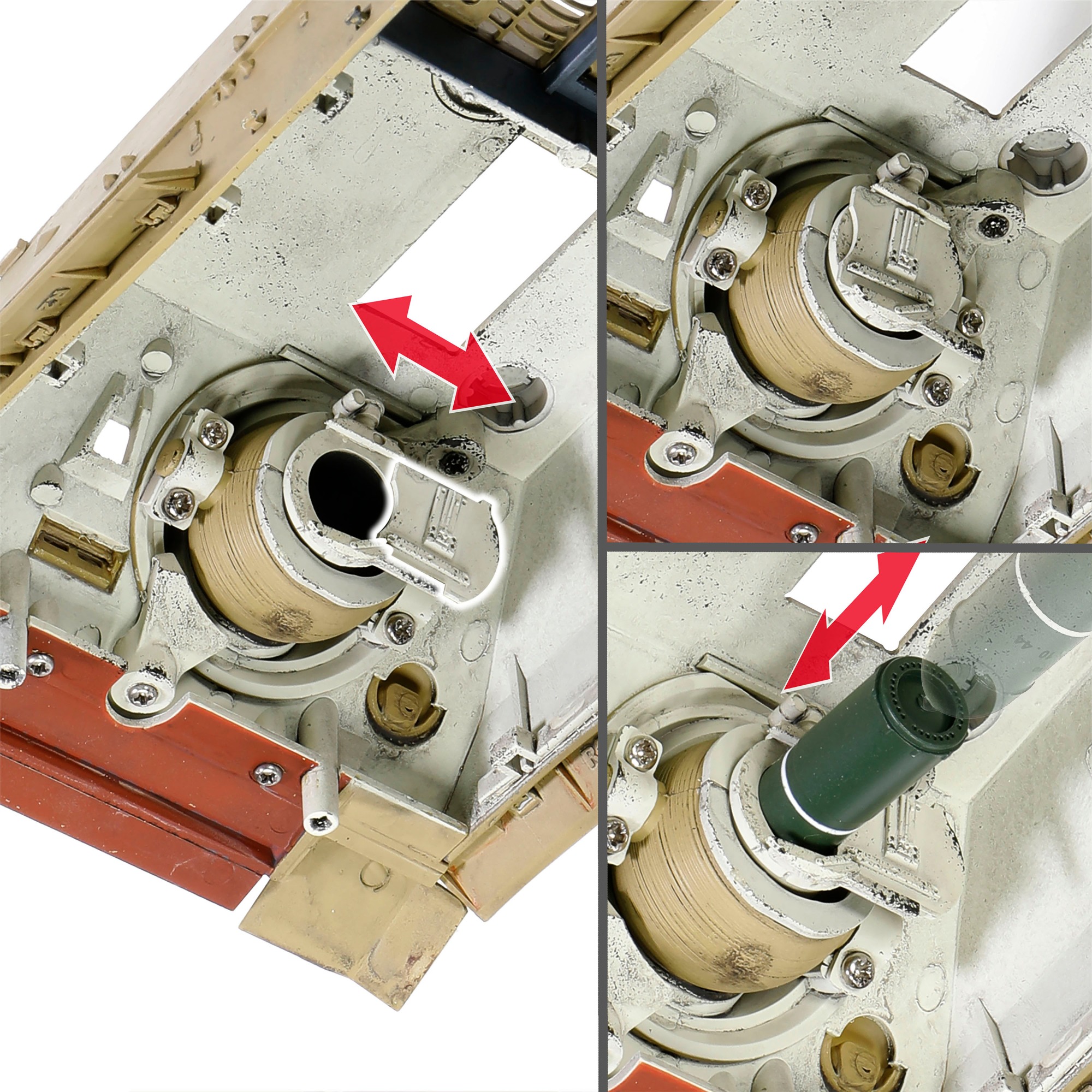
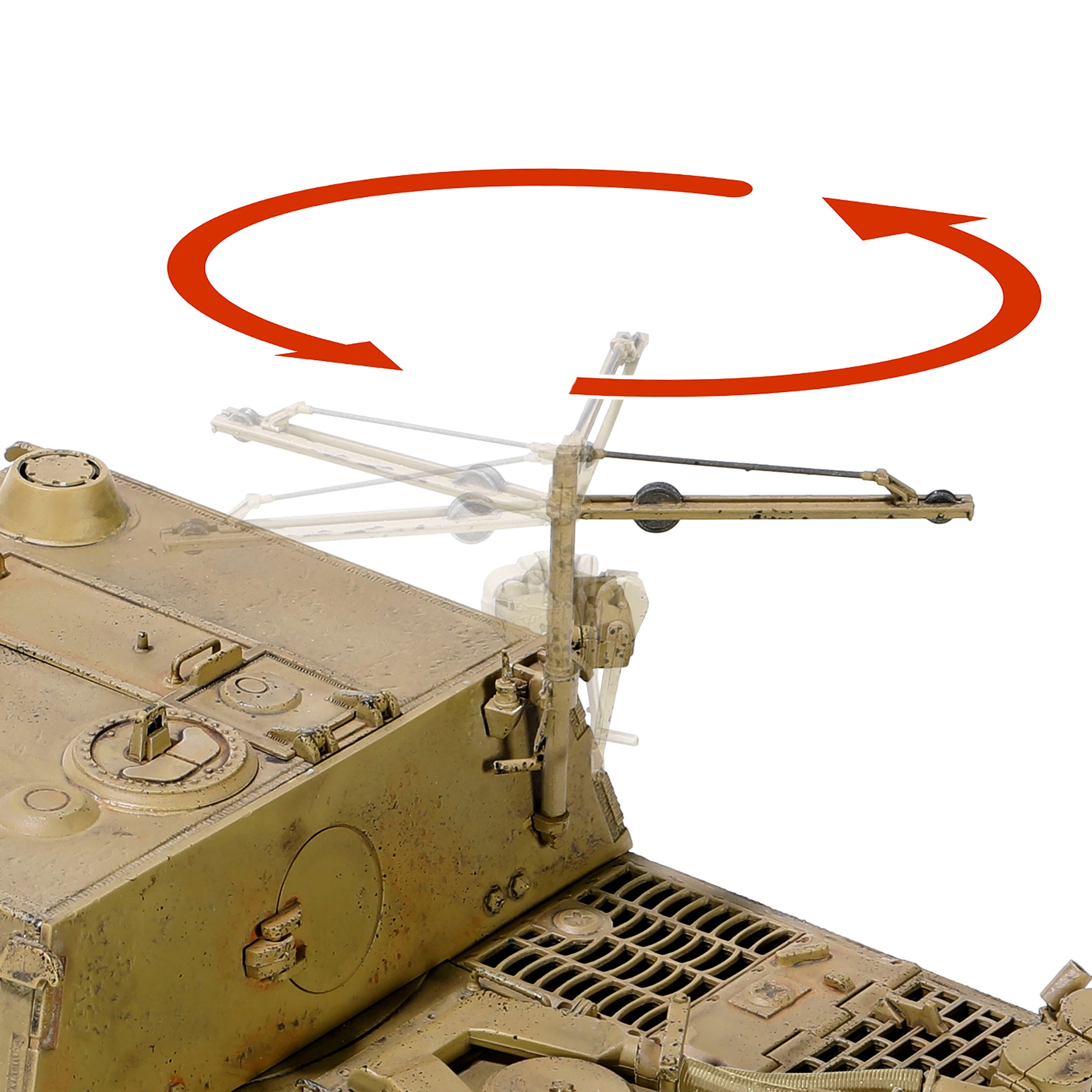
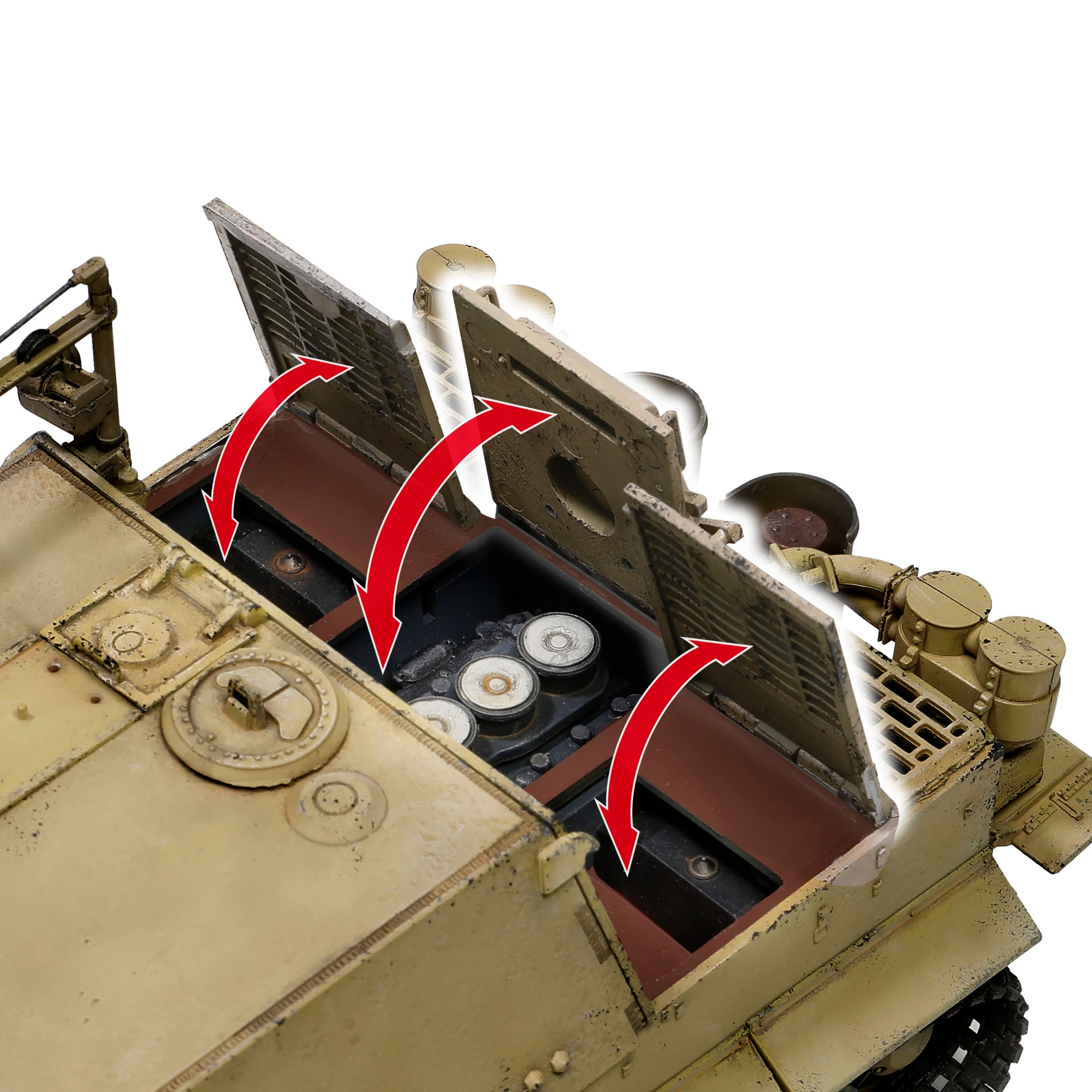
Sturmpanzer VI (German: Sturmmörser Tiger/Sturmpanzer VI) is a German assault gun used in World War II. It is based on the Tiger I tank chassis and uses the 380 mm Sturm Mörser "Assault Mortar" RW61 L/3.5, a large naval depth charge launcher. It was originally intended to provide heavy firepower support for infantry in urban combat, but only 18 were produced during the entire war, all of which were modified from damaged Tiger I tanks. The Assault Tiger self-propelled gun is also known as the "Tiger-Mörser", "Assault Mortar Tiger" (Sturmmörser Tiger), or "Sturmpanzer VI". ("Mörser" in German means "Mortar" in English)。
Since the Battle of Stalingrad began, the German Wehrmacht, which had been successfully attacking on the Russian steppes, finally encountered difficulties in urban warfare in the reinforced city buildings and areas, so it considered it necessary to produce heavy firepower to support the infantry. vehicle. At that time, the Wehrmacht only had the Sturminfanteriegeschütz 33B (StuIG 33 B), which was a 150mm SIG 33 howitzer modified on the chassis of the Panzerkampfwagen III. This type of assault gun was used as the only firepower to destroy the buildings in Stalingrad, but there were only 24 of them and half of them were lost in the Battle of Stalingrad.
In early 1943, the Sturmpanzer IV Brummbär self-propelled gun, developed on the chassis of the Panzer IV tank to replace the Type 33 infantry gun, appeared. However, the German Wehrmacht still felt that it was not enough. It still needed a self-propelled gun to support the infantry, but the armor needed to be thicker. The firepower needs to be stronger, so the idea of using a Tiger tank as the chassis and equipped with a 210mm howitzer was born.
In September 1943, Kluber used the chassis of the Tiger I tank as the basis for his design, then sent the body to Henschel for assembly of the chassis, and finally to Arquette to complete the superstructure of the body. The prototype was sent to Hitler a month later. The first mass-produced car body was handed over in December, and on February 20, 1944, Arquette completed three Assault Tiger gun carriages.
Due to the delay in the construction period, Hitler did not require an increase in the quantity and speed of mass production until April 19, but the fighting rooms and artillery of 12 Assault Tiger gun carriers were ready to be installed. In August, Arquette completed three more rebuilt Assault Tiger artillery vehicles. It was originally planned to complete another seven assault tiger artillery vehicles equipped with 380mm mortars before September 20, because Hitler had already completed the task in August. It was presented in person at the meeting on the 20th.
Finally, 10 assault tiger artillery vehicles were completed in mid-September, and another 5 were completed by the end of the year. At this time, Hitler's war situation was turning negative, and he pinned his hopes on all new weapons. Therefore, he planned to make special use of the Assault Tiger artillery vehicle. It was also expected that at least 300 rounds of Assault Tiger artillery ammunition would be produced every month to be sufficient. When the German troops on the eastern front were still looking for weapons to provide direct fire support for the stalemate, they later heard that the new weapon was a Navy 380mm anti-submarine depth bomb launcher converted into a rocket launcher version of a self-propelled mortar vehicle. The frontline troops were dumbfounded for a while. . Some officers and soldiers said that the Assault Tiger self-propelled artillery was simply a "monster with a tree stump."
The Assault Tiger is a heavily equipped vehicle used to support infantry, helping the infantry attack stubborn enemy bunkers or fortified strongholds. However, by the time the Assault Tiger entered the battlefield, the German army's situation had turned defensive, and instead the vehicle was mainly used for defensive warfare.
At the end of World War II, the German army formed a total of three Assault Tiger Companies: the 1,000th Company, the 1,001st Company, and the 1,002nd Company. It was originally expected that a company would be equipped with 14 Assault Tigers, but in the end, the company was equipped with only 4 vehicles. The 1,000th Company was formed on August 13, 1944. It mainly participated in the suppression of the Warsaw Uprising. Even the prototype vehicles participated in the suppression battle, and these Assault Tigers truly showed their use in attacking tough situations.